
No, a standard 12V charger cannot correctly charge an 18V battery. Its output is too low to bring the higher-voltage pack to full charge, and improvised connections can bypass the protections built into the battery and charger.
Use a charger that the battery manufacturer lists as compatible with the exact pack family and chemistry. A manufacturer-approved multivoltage charger is safe only because it is designed to recognize and charge each supported battery correctly.
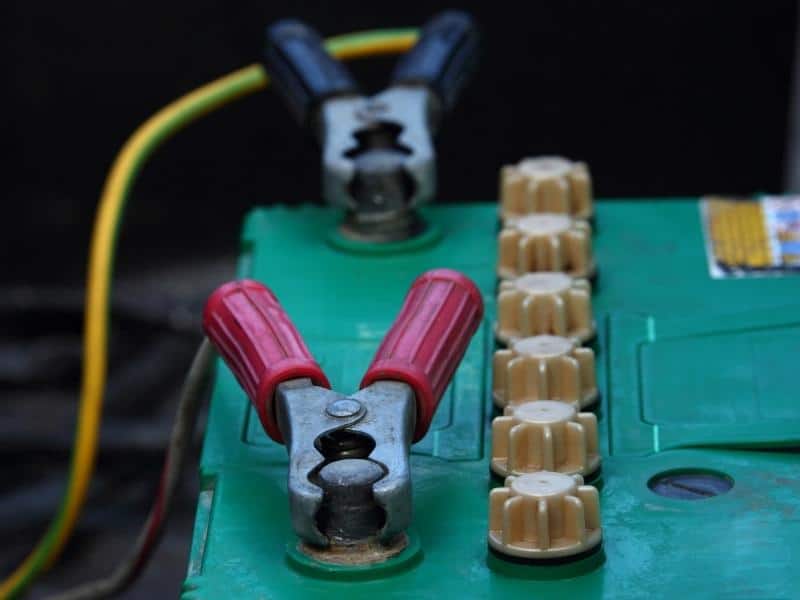
Why a 12V Charger Will Not Charge an 18V Battery
Charging requires a controlled voltage above the battery’s present voltage. A charger intended only for a 12V battery cannot provide the voltage profile an 18V pack needs, so the pack will remain partly or fully uncharged.
The label is only the starting point. Battery chemistry, cell count, temperature monitoring, connector layout and the battery management system must also match. Two products that physically connect are not necessarily electrically compatible.
Some chargers accept 12V power from a vehicle but charge an 18V tool battery. These are DC chargers with internal voltage conversion and pack-specific controls. They are not ordinary 12V battery chargers.
Use the Charger Specified for the Battery
Check the battery model number against the charger’s compatibility list or product manual. DEWALT, for example, publishes charger and battery compatibility charts and warns users to charge packs only with a charger specified for that battery type.
- Match the product family: Brand, connector and voltage labels alone do not prove compatibility.
- Match the chemistry: Lithium-ion, nickel-cadmium and nickel-metal hydride batteries require different charging controls.
- Use an intact pack: Do not charge a swollen, cracked, leaking, overheated or water-damaged battery.
- Charge in a suitable location: Keep the charger dry, ventilated and away from combustible material.
If either manual marks the charger and battery as incompatible, do not use the combination.
Do Not Improvise a Charging Connection
Do not connect an 18V pack directly to a 12V automotive charger, power supply, solar panel or another battery. Also avoid homemade adapters that expose terminals or defeat temperature and communication contacts.
A boost converter can raise voltage, but that does not make it a safe battery charger. The system still needs the correct current limits, charge stages, pack monitoring and shutoff behavior. A mistake can damage cells or cause overheating and fire.
If the original charger is unavailable, buy a genuine or manufacturer-approved replacement. For off-grid or vehicle use, choose a compatible DC charger or use the normal AC charger from a properly sized inverter.
What if the Battery Will Not Charge?
First confirm that the outlet works, the charger is compatible and the pack is within the temperature range stated in its manual. Clean only accessible contacts as directed by the manufacturer and reseat the pack.
If the charger reports a battery fault, the pack becomes unusually hot, or there is odor, swelling or smoke, disconnect power if it is safe to do so and move away from the area. Do not open or repair a sealed tool battery. Use the manufacturer’s service or recycling route.
Bottom line: A dedicated 12V charger is not a substitute for an 18V charger. Use only a charger explicitly approved for the battery model.
Reference: DEWALT charger and battery compatibility guidance.