
An improvised generator exhaust extension can leak carbon monoxide, overheat nearby material and create enough backpressure to damage the engine. Moving exhaust through a hose does not make it safe to run a portable generator in a garage, shed or other enclosed space.
For portable units, the safer answer is outdoor placement at least 20 feet from the home with the exhaust aimed away from buildings. Use an exhaust extension only when the generator manufacturer provides an approved system or a qualified engineer designs it for a permanently installed set.
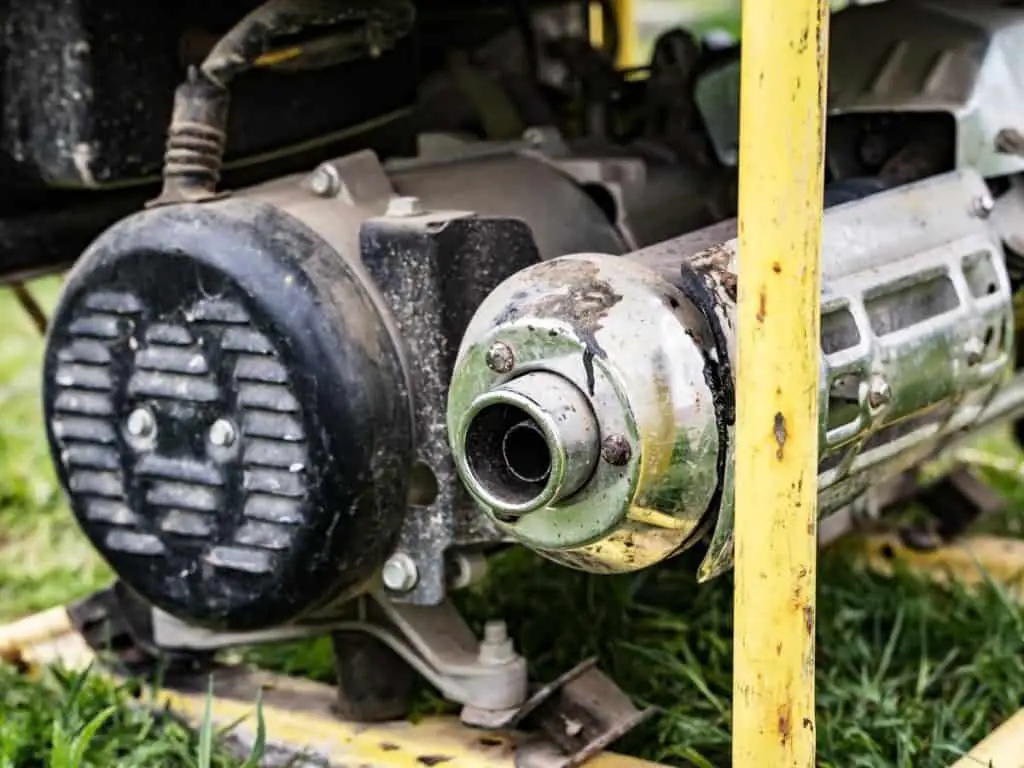
Can you extend a generator exhaust?
Technically, exhaust can be engineered for some stationary generators. The system must control temperature, vibration, leakage, condensate, corrosion and backpressure while preserving service access and ventilation.
That is different from attaching flexible hose to a portable generator. CPSC has identified leakage, hot surfaces and excessive backpressure as reasons a hose extension is not a technically reliable fix for portable-generator carbon monoxide risk.
Never use an extension to justify running a portable generator indoors, in a garage, under a deck or near doors, windows and vents.
Main risks of an improvised extension
- Carbon monoxide leaks: Clamps, adapters and flexible hose joints can separate or leak.
- Backpressure: Excessive restriction can reduce power, raise exhaust temperature and damage valves or other engine parts.
- Fire and burns: Mufflers, fittings and exhaust gases remain dangerously hot.
- Condensate: Long or poorly sloped runs can collect water and accelerate corrosion.
- Vibration: A rigid connection can crack the muffler, manifold or engine mount.
- Blocked cooling: Enclosures and noise barriers can recirculate hot air around the generator.
If a stationary system needs exhaust piping
- Use the generator and engine manufacturers’ allowable backpressure limits.
- Use exhaust-rated pipe, flexible connectors, supports and weather termination.
- Keep hot components clear of combustibles and protect people from contact.
- Route condensate as specified without creating a low point that blocks flow.
- Verify the discharge cannot re-enter any occupied building.
- Have the completed installation inspected and tested for leaks.
Permanent exhaust design may also be governed by mechanical, fire, fuel-gas and building codes. The local authority having jurisdiction makes the final call.
Safer ways to reduce generator noise
Increase distance, choose a quieter or inverter model, and use a manufacturer-approved outdoor enclosure where available. A freestanding acoustic barrier can help if it does not trap exhaust, block cooling air or create a fire hazard.
Do not add an automotive muffler unless the generator or engine manufacturer approves the resulting weight, heat and backpressure. Much of a portable generator’s noise comes from the engine and cooling fan, so a muffler swap may deliver less improvement than expected.
Bottom line
A portable generator exhaust extension is not a safe substitute for correct outdoor placement. For stationary equipment, use a professionally designed system that meets the manufacturer’s backpressure and temperature requirements.
Sources