
A biomass boiler is a central-heating appliance that burns wood fuel and transfers the heat into water.
Modern pellet systems can feed and control combustion automatically, but fuel storage, ash removal, emissions and maintenance make them more demanding than a gas or electric boiler.
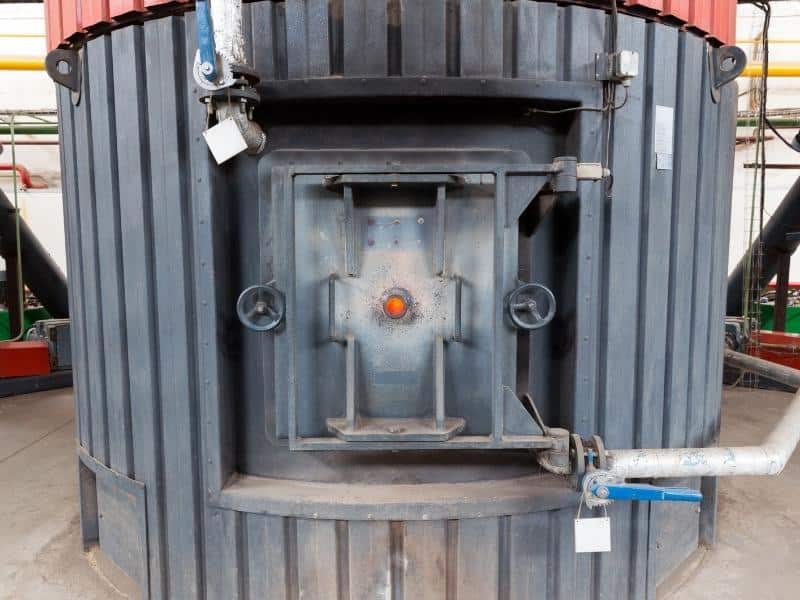
How a biomass boiler works
- Fuel moves from a hopper or storage room into the combustion chamber.
- Controlled air supports combustion at the required rate.
- A heat exchanger transfers energy from the hot gases to the building’s water circuit.
- Pumps send hot water to radiators, underfloor heating, a thermal store or a domestic hot-water cylinder.
- Flue gases pass through emissions controls and a correctly designed chimney.
- Ash collects for manual or automatic removal.
Sensors and controls adjust fuel and air to meet demand. A thermal-storage tank can let the boiler run in longer, cleaner cycles while the building draws heat as needed.
Pellet, chip and log boilers
Pellet boilers use a consistent, dense fuel that suits automated feeding and compact storage. They are common where convenience matters.
Wood-chip boilers can serve larger buildings or heat networks. Chips are cheaper in some markets but need more storage, robust handling and tight moisture specifications.
Log or cordwood boilers are loaded manually. Modern gasification models burn wood gases at high temperature and often work with a large thermal store. They require dry, correctly sized wood and regular operator attention.
How often a biomass boiler needs fuel
There is no fixed refill interval. It depends on heat demand, boiler efficiency, fuel energy content and usable storage volume.
A small integrated pellet hopper may need frequent filling in cold weather. A bulk pellet silo can support automated deliveries and much longer operation. Chip storage is larger still, while a log boiler is normally loaded for each burn cycle.
Ask the designer for annual fuel use, peak-day consumption and usable storage, then confirm that delivery vehicles can reach the fill point.
Efficiency, emissions and fuel quality
Dry, consistent fuel improves output and reduces smoke, deposits and corrosion. Wet chips or logs waste energy evaporating water and can cause incomplete combustion.
Wood combustion still produces fine particles, carbon monoxide and other pollutants. In the United States, new hydronic heaters and forced-air furnaces are covered by EPA wood-heater standards. Check the EPA certification label and local air-quality rules before purchase.
Do not burn painted, treated or contaminated wood. Follow the manufacturer’s approved-fuel specification and store fuel dry.
Costs and practical checks
Budget for the boiler, fuel store, feed system, thermal storage, flue, plumbing, electrical work, permits and commissioning. Ongoing costs include fuel delivery, chimney cleaning, ash handling and professional service.
Biomass is most competitive where a reliable local fuel supply and steady heat demand justify the extra equipment. It is often less attractive in a small, well-insulated home with limited storage or strict local emissions rules.
For U.S. installations, the federal Energy Efficient Home Improvement Credit is not available for property placed in service after December 31, 2025. Check current state, local and utility incentives instead.
Maintenance and safety
Clean heat-exchange surfaces and remove ash at the interval in the manual. Inspect seals, augers, fans, sensors and safety controls, and have the chimney swept as required.
Install carbon-monoxide alarms, keep combustible material clear and use a qualified installer. Dust in pellet or chip stores, hot ash and confined storage areas need appropriate controls.
Bottom line: biomass boilers can provide dependable low-fossil heating where fuel and storage are practical, but clean operation depends on equipment certification, dry fuel and disciplined maintenance.
Sources: EPA wood-burning appliance guidance, EPA certified wood-heater database and IRS Form 5695 instructions.