
Yes, a modern cold-climate heat pump can work below 20°F, and many continue operating below 5°F. The real question is whether the selected model can deliver enough heat efficiently at your home’s winter design temperature.
Heating capacity and efficiency fall as outdoor air gets colder, while the building needs more heat. The point where the heat pump no longer covers the full load is its balance point, and that is when supplemental heat becomes important.
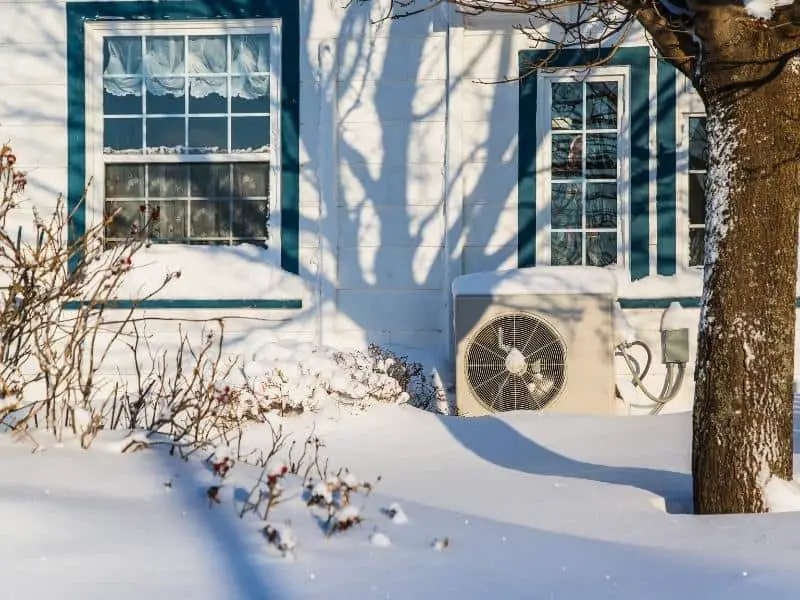
How a Heat Pump Extracts Heat Below Freezing
Outdoor air still contains thermal energy below 32°F. Refrigerant in the outdoor coil boils at a lower temperature, absorbs that heat and carries it to the compressor, which raises the refrigerant temperature for indoor heating.
Frost can form on the outdoor coil in cold, damp weather. The system periodically enters defrost mode, temporarily reversing the refrigeration cycle to warm the coil. The outdoor fan may stop and steam may appear. These are normally expected.
Defrost energy, lower refrigerant pressure and increasing compressor speed affect cold-weather efficiency. Model-specific data show how much capacity remains at each temperature.
What Current Cold-Climate Ratings Mean
ENERGY STAR’s 2026 cold-climate specification requires certified systems to meet both of these low-temperature tests:
- a coefficient of performance of at least 1.75 at 5°F; and
- heating capacity at 5°F of at least 70% of the unit’s capacity at 47°F.
A COP of 1.75 means 1.75 units of heat are delivered for each unit of electricity under the test condition. It does not guarantee that the unit is large enough for a particular house.
Some models publish performance below 5°F and have much lower operating limits. The minimum operating temperature is not the same as the temperature at which the unit can carry the full building load.
Size the System for the Design Temperature
Ask the contractor for a room-by-room load calculation using the local winter design temperature. Then compare the calculated Btu/h load with the manufacturer’s extended-capacity table at that temperature.
Also confirm:
- the selected indoor and outdoor units form a rated match;
- the expected balance point;
- how much electric resistance or furnace backup is required;
- whether backup runs with or instead of the compressor;
- duct and airflow performance; and
- the utility rate and demand charges during cold weather.
Weatherization can lower the design load and reduce backup-heat use. Air sealing and insulation may be more cost-effective than buying a larger heat pump.
How to Operate a Heat Pump in Very Cold Weather
- Use steady thermostat settings unless the controls are designed for aggressive setbacks.
- Do not select emergency heat unless the heat-pump compressor is unavailable or the manufacturer directs it.
- Keep the outdoor coil clear of leaves, drifting snow and roof runoff without chipping ice from it.
- Replace or clean filters and keep supply and return registers open.
- Let normal defrost cycles finish.
- Track backup-heat use through the thermostat, energy monitor or utility data where possible.
Call for service if the outdoor unit remains encased in ice, defrost cycles do not clear frost, breakers trip, the system makes abnormal noise or indoor temperature continues falling with backup heat available.
Bottom line: 20°F is not a cutoff. Choose from verified low-temperature capacity, the home’s calculated load and a clear backup-heat strategy.
Reference: ENERGY STAR cold-climate heat-pump criteria.