
Choose a heat-pump breaker from the equipment nameplate, not from tonnage. The outdoor unit lists minimum circuit ampacity and maximum fuse or circuit-breaker size, and those values can differ substantially between models with the same heating capacity.
The indoor air handler and electric backup-heat kit may need a separate, much larger circuit. A licensed electrician should match each circuit, conductor, disconnect and overcurrent device to the exact indoor and outdoor model combination.
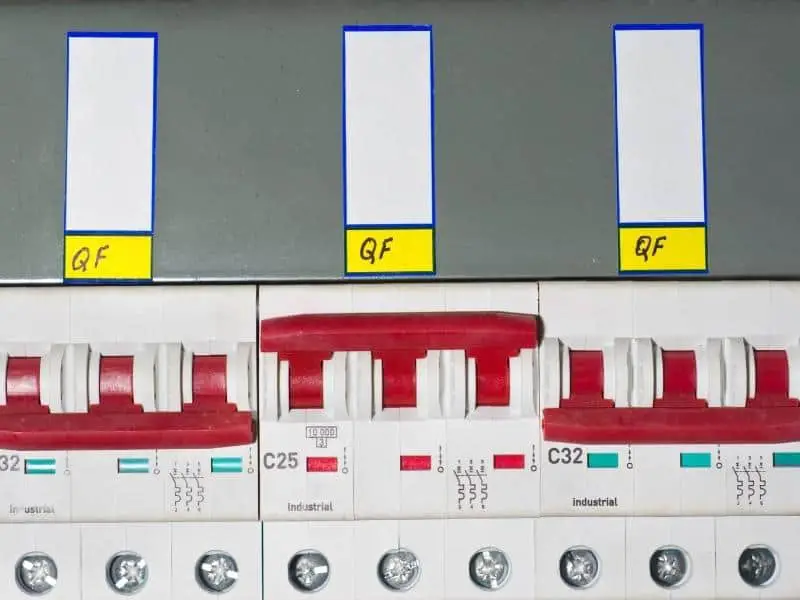
Read MCA and MOCP on the Nameplate
Minimum circuit ampacity, or MCA, is the minimum conductor ampacity required for that equipment circuit after the applicable motor-load calculations. It is not the breaker size.
Maximum overcurrent protection, or MOCP or MOP, is the largest permitted fuse or circuit breaker for that unit under its listing and instructions. The installed breaker must not exceed this value.
The permitted breaker may be larger than the MCA because compressors and motors need short starting current. Do not replace it with a generic breaker selected from watts divided by volts.
Example only: a manufacturer data table may show an MCA of 35.1A and a maximum 40A breaker for one air-handler and heat-kit combination, while another combination requires a different circuit. Always use the values for the exact model and voltage.
Outdoor Unit, Air Handler and Heat Strips
A split heat pump often has one circuit for the outdoor compressor unit and another for the indoor air handler. Electric resistance heat can add several kilowatts and may require its own circuit or a different air-handler circuit, as specified by the heater kit.
Confirm all of the following:
- exact outdoor-unit, indoor-unit and heat-kit model numbers;
- supply voltage and phase;
- MCA and maximum fuse or breaker for each circuit;
- whether fuses, HACR-type breaker or other protection is specified;
- conductor insulation, terminal temperature rating and installation method;
- disconnect rating and required service receptacle; and
- local code amendments and permit requirements.
Wire size is not determined by breaker size alone. Conductor material, terminal ratings, ambient temperature, bundling, distance and voltage drop all matter.
Why a Heat-Pump Breaker Trips
A trip is a symptom, not permission to install a larger breaker. Possible causes include:
- a compressor, fan motor or electric heat fault;
- shorted or damaged wiring;
- loose or overheated terminals;
- incorrect breaker type or failing breaker;
- low voltage or excessive voltage drop;
- blocked airflow, dirty coils or a failed capacitor on applicable models;
- ice, water intrusion or control faults; and
- the wrong circuit size for the installed equipment combination.
Leave the breaker off if it trips repeatedly, will not reset, feels hot, smells burned or shows discoloration. HVAC equipment contains high voltage and stored capacitor energy even after power is removed.
Replacement and Installation Checklist
- Photograph the complete equipment nameplates and model numbers.
- Obtain the current installation instructions for the matched system and heat kit.
- Verify MCA, MOCP, voltage, phase and number of required circuits.
- Calculate conductor ampacity and voltage drop for the actual installation.
- Confirm panel capacity, breaker compatibility and disconnect rating.
- Complete permits, torque connections to specification and commission the unit.
Bottom line: There is no standard breaker size for a 2-ton, 3-ton or 5-ton heat pump. Use the nameplate MCA and maximum overcurrent value for each exact component.
Reference: Daikin heat-pump installation guidance showing MCA and maximum overcurrent protection.