
Modern utility-scale wind turbines are audible, but they are not normally loud at residential setback distances. DOE reports typical sound levels of about 35 to 45 dBA at 300 meters, with the exact result shaped by turbine model, terrain, weather and background sound.
The useful question is not whether a turbine makes noise, but what level, character and frequency of operation a specific project will create at each home. That requires a site sound model and post-construction verification.
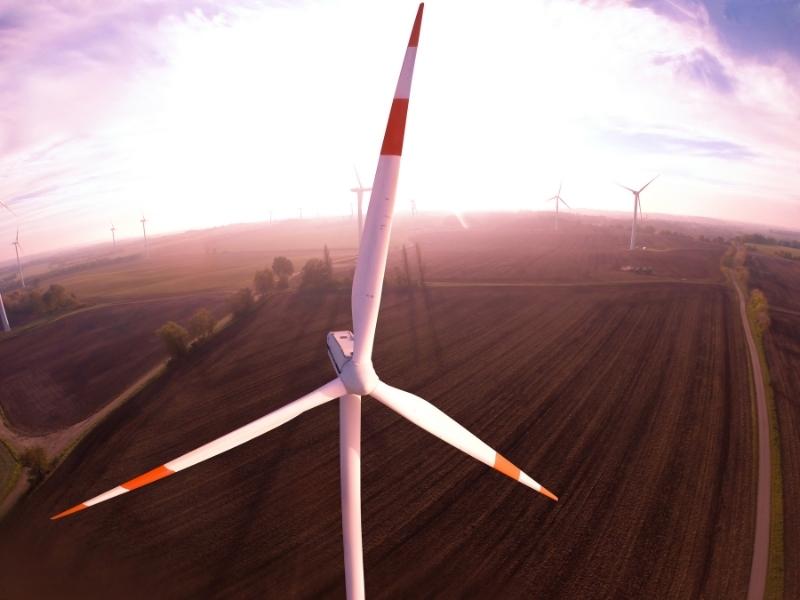
What Wind Turbines Sound Like
Most turbine sound is aerodynamic: a repeating swish or whoosh as blades move through turbulent air. Mechanical components such as the gearbox, generator, yaw system and cooling fans can add hum or tonal sound, although modern nacelles are designed to control it.
Sound varies with blade speed, wind shear, atmospheric stability and direction. It may be more noticeable at night when background sound falls or when atmospheric conditions carry sound farther.
A-weighted decibels, written dBA, approximate human hearing across frequency. A project study may also examine low-frequency bands, tones, amplitude modulation and short maximum levels rather than relying on one average dBA value.
How Loud Is a Utility Wind Turbine?
DOE gives an average range of 35 to 45 dBA at 300 meters, a typical closest residential distance. At distances above 400 meters, modern turbines are typically below 40 dBA, although site conditions and turbine operation matter.
Sound does not fall by one fixed amount at every site. Distance, ground absorption, hills, vegetation, temperature gradients and multiple turbines all affect propagation.
The sound power level published for a turbine at the nacelle is not the same as the sound pressure level heard at a residence. Compare modeled receptor levels with the local ordinance, not the machine’s source rating.
Noise, Annoyance and Health Claims
A DOE-sponsored national survey found that calculated wind-turbine sound was a strong predictor of whether people heard a turbine but only a weak predictor of reported annoyance. Visual context, attitudes, project process and community benefits also influenced response.
That does not mean complaints should be dismissed. Tonal noise, unexpected modulation or a malfunction may be more intrusive than a compliant average suggests. Complaints should be logged with time, weather and operating conditions so the operator can compare them with turbine data.
Do not treat online claims about infrasound or a specific illness as a substitute for medical assessment or a site acoustic study. People with health symptoms should consult a healthcare professional, while sound compliance should be evaluated by qualified acoustical and regulatory professionals.
What a Good Wind-Noise Review Includes
- turbine model and warranted sound-power data;
- receiver locations and conservative operating assumptions;
- terrain, ground factor and atmospheric conditions;
- cumulative sound from every turbine and substation;
- day, night, tonal and low-frequency requirements in the local ordinance;
- uncertainty margin and any reduced-noise operating modes;
- baseline measurements where appropriate; and
- a complaint, investigation and post-construction testing process.
For a small wind turbine, review certified sound data at the relevant wind speed and proposed tower height. Rooftops and turbulent urban sites can transmit vibration and produce disappointing energy output.
Bottom line: Utility turbines commonly produce 35 to 45 dBA at about 300 meters, but a project-specific model and enforceable limits determine the actual neighborhood impact.
References: DOE WINDExchange sound guidance and Lawrence Berkeley National Laboratory national sound survey.