
A wind turbine’s rated power does not tell you how much energy it will produce in a year.
Annual output depends on the site’s wind-speed distribution, the turbine’s power curve, hub height, rotor size, availability and electrical losses.
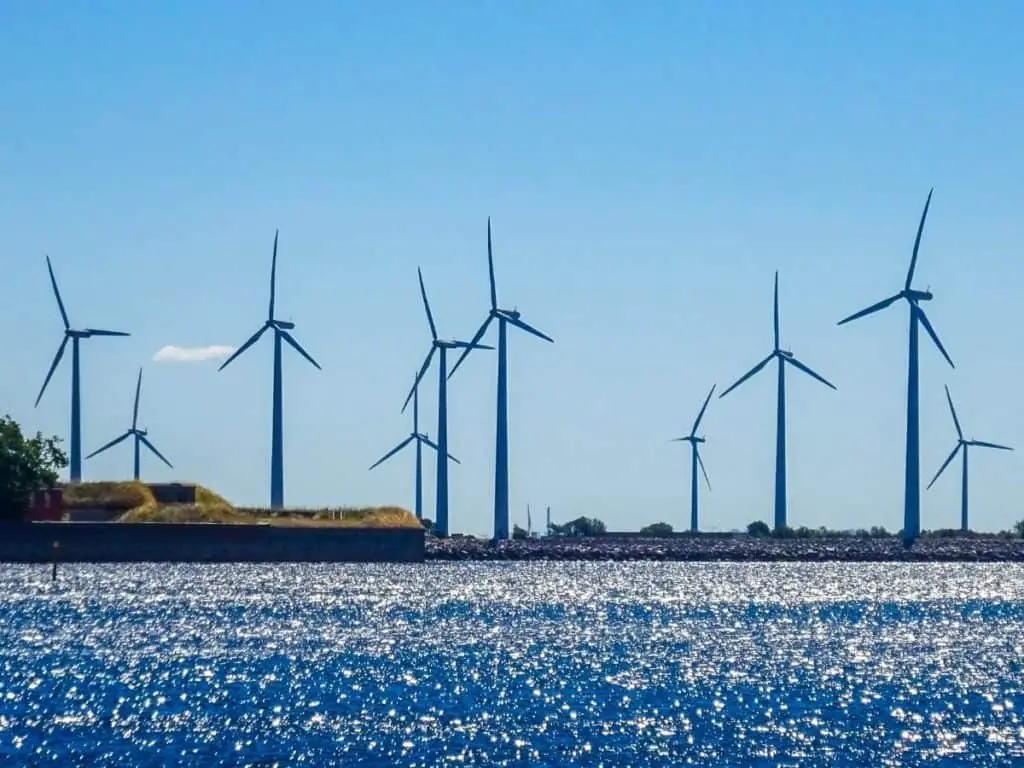
Power and energy are different
Power is an instantaneous rate measured in watts, kilowatts or megawatts. Energy is accumulated output measured in kilowatt-hours or megawatt-hours.
A 3-megawatt turbine can deliver up to about 3 megawatts under its rated conditions. It does not produce 3 megawatts at every moment. Below cut-in speed it produces little or no power, it reaches rated output only across part of its operating range, and it shuts down above its high-wind limit.
The practical annual-output calculation
For a quick estimate, use:
Annual energy = rated capacity × capacity factor × 8,760 hours.
For example, a 3-megawatt turbine operating at a 35 percent capacity factor would produce:
3 MW × 0.35 × 8,760 = 9,198 MWh per year.
A 10-kilowatt small turbine at a 15 percent capacity factor would produce:
10 kW × 0.15 × 8,760 = 13,140 kWh per year.
Capacity factor is actual energy divided by the energy the turbine would produce at full rated power for the same period. Use a site-specific estimate, not a national average, for an investment decision.
Why wind speed has such a large effect
The power available in wind is:
P = 0.5 × air density × swept area × wind speed cubed.
The wind-speed term is cubed, so a modest increase can greatly raise available power. The turbine captures only part of that power, and its control system limits output at higher speeds.
Rotor swept area increases with the square of blade diameter. Taller towers can reach stronger, less turbulent wind, while buildings and trees can sharply reduce production from a poorly sited small turbine.
Use a power curve for a credible estimate
A professional energy assessment combines the turbine’s certified power curve with the frequency of each wind speed at the planned hub height. It then subtracts losses for turbulence, wakes, icing, electrical conversion, downtime, curtailment and other site conditions.
Average wind speed alone is not enough because two sites with the same average can have different wind distributions and very different energy output.
For small wind, compare models by net annual energy production at the site, not by nameplate capacity. The Department of Energy recommends annual kilowatt-hours as the most useful performance measure.
Horizontal-axis and vertical-axis turbines
Horizontal-axis turbines dominate commercial wind energy because their large rotors and tall towers capture strong, consistent wind. Vertical-axis designs can accept wind from changing directions, but their real output still depends on swept area, power curve, height, turbulence and losses.
Do not estimate a vertical-axis turbine from rated wattage or marketing claims. Ask for independently tested annual energy data at relevant wind speeds and confirm that the installation can reach clean airflow.
What to request before buying
- A certified power curve and rated annual energy data.
- Wind measurements or a defensible hub-height resource model.
- Gross and net annual energy estimates with every loss stated.
- Expected availability, maintenance and inverter replacement assumptions.
- Interconnection limits, export compensation and curtailment risk.
Bottom line: calculate wind-turbine energy with a site-specific power curve and loss model. The simple capacity-factor equation is useful for screening, but it is not a substitute for a wind assessment.
Sources: U.S. Department of Energy Small Wind Guidebook, DOE distributed wind overview and U.S. Energy Information Administration capacity-factor definition.