
Building a new home in Texas means electricity service doesn’t already exist at your address. There’s no meter to transfer, no ESID on file, and no account history for a retail electric provider to pull up. Getting power flowing before closing or move-in takes coordination between your builder, the local utility, and a retail electric provider you choose yourself.
The process for electricity for new construction in texas step by step guide looks different from a typical move. You’re not switching providers at an existing address. You’re creating brand-new electric service from the ground up, starting with a temporary construction meter and ending with a permanent smart meter tied to your home’s official 911 address.
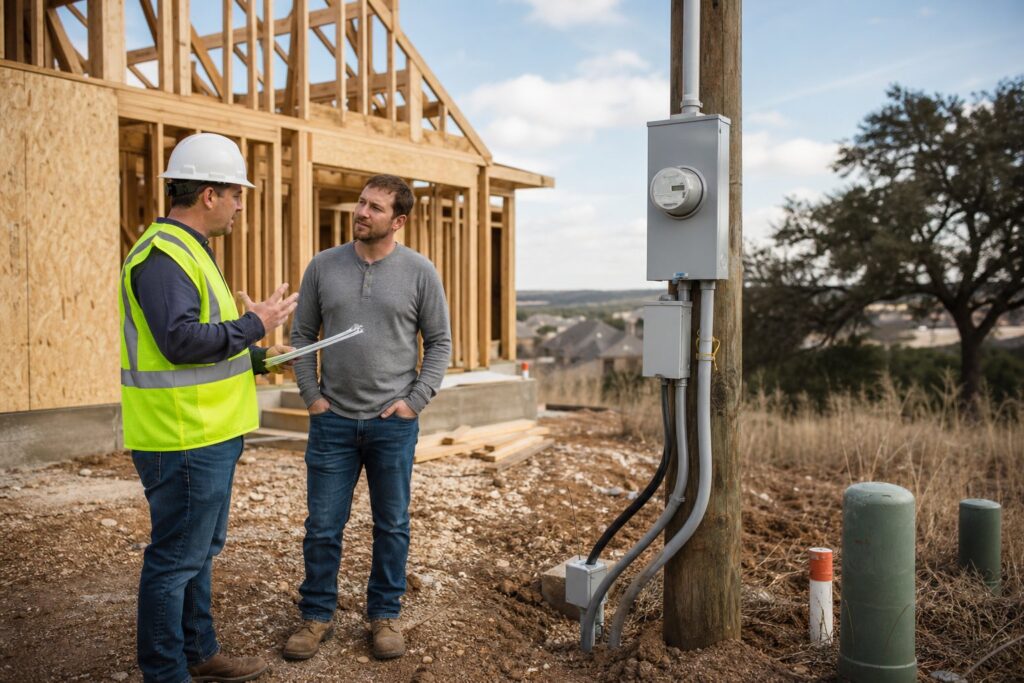
This guide walks through who handles what, what paperwork you’ll need, and how to time your plan selection so the lights are on when you move in.

Determine Who Must Build and Activate the Service
Three parties share the job of getting your new home connected: the local utility that owns the wires, the retail electric provider you choose to handle billing, and your builder, who manages the physical wiring and permits. Knowing who to call for each task can save weeks of back-and-forth.
Texas splits electric service into two roles almost everywhere except a few cities. A transmission and distribution utility (TDU) such as Oncor, CenterPoint Energy, AEP Texas, or TNMP owns the poles, wires, and meters.
A retail electric provider (REP) sells you the electricity and sends the bill. Your builder works directly with the TDU for construction power and the permanent hookup, while you work with the REP to choose a plan.
Is the Property in a Deregulated Texas Electricity Market?
Most of Texas falls under ERCOT-regulated deregulation, meaning you choose your own REP through Power to Choose or a comparison site. Austin Energy, CPS Energy in San Antonio, El Paso Electric, and most municipal utilities and co-ops aren’t deregulated.
If your new build sits in one of those service areas, you’ll set up service directly with the local utility instead of shopping among plans.
What the TDU, REP, and Builder Each Handle
The TDU builds the physical connection: poles, transformers, wiring to the meter base, and the meter itself. The REP is a licensed REP regulated by the PUCT that sells the energy and manages your billing plan.
Your builder coordinates the site work, applies for the temporary construction meter, and makes sure the electrical panel passes inspection. According to AEP Texas’s builder guidance, the site address, meter location, and construction details all get submitted before a technician even visits the property.
Existing Meter vs. Brand-New Electric Service
An existing meter transfer only requires a REP to request activation using the ESID already on file. Brand-new electric service has no ESID yet.
The TDU has to physically run lines, install a meter base, and assign a fresh ESID before any REP can activate a plan.
How to Verify the 911 Address, Meter Number, and ESID
Your builder or the county addressing office assigns the 911 address first, since utilities won’t process a request without it. Once the TDU installs the meter, it generates a meter number and an electric service identifier (ESID), a unique 17-22 digit code tied to that specific location.
You’ll need this ESID before any REP can enroll you in a plan.
When Municipal Utilities and Co-ops Use a Different Process
Co-ops like Bluebonnet and Sam Houston Electric Cooperative require a line design appointment before construction power gets connected, according to Bluebonnet’s new construction process and Sam Houston Electric’s service guidelines.
Sam Houston charges a $75 connect fee plus a membership deposit and requires a copy of your photo ID with the application. Municipal utilities like Austin Energy follow a similar single-provider model, with no REP shopping step.
Complete the Construction-to-Move-In Connection Process
Getting from bare land to an energized home follows a defined sequence: temporary power for tools and crews, inspections, a permanent meter, and finally a REP plan activated before your move-in date. Skip a step or put things in the wrong order, and new-build energization can hit a snag.
Request Permanent Service and a Temporary Construction Meter
Builders request a temporary construction meter first because crews need power for saws, lighting, and equipment well before the home is livable. This request goes through the TDU serving the property, not a REP.
AEP Texas notes that builders should call ahead or use an online form with the site address and requested service type ready, according to AEP Texas’s new home service guide.
Prepare the Site, Meter Location, and Electrical Load Details
The TDU needs specifics before scheduling a technician visit: the site readiness date, a site plan showing septic and driveway locations, the planned meter spot, and load information, including square footage and heating and cooling kilowatt draw. This information shapes the design package the technician creates afterward.
Complete Inspections, Easements, Permits, and TDU Requirements
Local electrical inspections have to pass before a smart meter can be energized. Easements, construction drawings, and any required permits also get finalized during this phase.
Energy Ego’s guide to TDU electrical permits breaks down which permits apply by utility territory, since requirements vary between Oncor, CenterPoint, AEP Texas, and TNMP zones.
AEP Texas flags several common delay triggers here: project scope changes, requests for multiple cost estimates, missing information, and third-party easement holdups, as noted in AEP Texas’s construction timeline notes.
Receive the Smart Meter, ESID, and Energization Approval
The TDU installs the permanent smart meter and assigns the ESID only after inspections clear and deposits are settled. This ESID is the key piece of information your REP needs to activate a plan.
AEP Texas states that the meter is energized once the electrical inspection, security deposits, and remaining requirements are complete.
Choose an Electricity Plan Before the Permanent Meter Is Energized
Line up a REP and plan before the meter goes live, so power turns on as soon as it’s energized instead of sitting dark for days. Every plan comes with an Electricity Facts Label (EFL) showing the average price per kWh, base charge, and TDU delivery charges included in the rate.
Compare the fixed 500 kWh rate against the 1,000 kWh or 2,000 kWh rate on the EFL, since usage tiers can change the effective price per kWh quite a bit. A new-build home with a larger HVAC system often lands in a higher usage tier than the builder’s estimate.
You can compare electricity rates for your address once you have your ESID, since rates and available plans vary by TDU territory and ZIP code.
Set the Start Date and Confirm Power Before Closing or Move-In
Set your REP start date two to three days before your actual move-in or closing date, giving the TDU a little breathing room to complete final energization. If you’re moving to Texas from out of state and juggling a new-build timeline, make sure the start date matches your builder’s certificate of occupancy date, not the original estimated completion date.
New construction schedules have a habit of shifting at the last minute.
How Much Does New Construction Electric Service Cost?
New construction electric costs fall into two buckets: TDU connection charges and REP plan charges. AEP Texas may charge an estimated construction cost based on line extension distance and site complexity, disclosed in the design package after the technician visit.
Sam Houston Electric Cooperative charges a flat $75 connect fee plus a membership deposit for new service, according to Sam Houston’s new construction fees.
On the REP side, expect either a security deposit based on your credit check results or a letter of credit from a previous utility to waive it. Prepaid electricity plans skip the deposit entirely by requiring an upfront balance instead.
Avoid Deposits, Delays, and Contract Mistakes
Skip an unnecessary deposit by asking your REP whether a letter of credit from a previous address qualifies for a waiver. Many new-build buyers already have utility history somewhere else, so it’s worth checking.
Match your plan’s contract length to how long you expect to stay in the home. Signing a 24-month fixed plan right before selling rarely makes sense, especially with the early termination fee (ETF) most contracts carry.
Common delay causes include incomplete site plans, missing 911 addresses during REP enrollment, and mismatched load estimates that trigger a second technician visit. Confirm that your ESID is active before your REP submits the enrollment, since a premature request can be rejected and pushed to the back of the queue.
Before signing anything, check today’s electricity offers so you’re comparing real rates with your builder’s estimated usage, not some generic average.
Conclusion
New construction electric service in Texas runs through the TDU first, then the REP. Your builder coordinates the temporary construction meter, inspections, and permanent smart meter installation with the local utility.
You handle picking a plan once the ESID is assigned. Locking in your REP plan before the meter energizes keeps your move-in day free of power delays.
Get the 911 address confirmed, verify your ESID is active, and line up your electricity plan before your closing date arrives. Take a few minutes to compare providers and plan prices so your new home has power ready the day you walk through the door.