
Weekend moves are the norm in Texas, and electricity service can usually keep up with your schedule. Most Texas retail electric providers process weekend connections through the same deregulated system used for weekday switches, though the exact timing depends on your transmission and distribution utility and the day you enroll.
Texas homes sit inside a deregulated energy market, which means you pick your electricity provider instead of getting assigned one by default. That setup gives you more control over start dates, contract terms, and pricing than homeowners in regulated states get.
Getting power turned on for a Saturday move-in works differently than making a Sunday or holiday request, and the provider you choose can change what’s possible. The next section breaks down what determines whether your weekend connection happens today, tomorrow, or Monday morning.

Can You Start Electricity Service on a Weekend?
Yes, you can start electricity service on a weekend in Texas, and Saturday connections are common across the state. Nine Texas light companies process same-day connections on Saturdays, with several accepting orders until 6 PM, according to a breakdown of Saturday cutoff schedules. Sunday and holiday activations are harder to get because fewer utility crews and automated systems run on those days.
What Same-Day Saturday Activation Requires
Same-day Saturday activation requires enrolling before your provider’s cutoff time, usually somewhere between 3 PM and 6 PM, depending on the company. Providers send an electronic request to your area’s transmission and distribution utility as soon as you sign up, and that request has to clear before the cutoff to be processed the same day, according to an overview of how same-day electricity connections work.
A few things can speed the process along:
- A working smart meter already installed at the address
- No past-due balance tied to your name at that service address
- Enrollment completed online or by phone before the cutoff, not in person at a walk-in office
Deposits and credit checks can also slow things down. No-credit-check or prepaid options from providers like Payless Power skip that step entirely, which helps when you’re racing a Saturday deadline.
Why Sunday and Holiday Connections May Wait Until the Next Business Day
Sunday and holiday connections often wait until Monday because most transmission and distribution utilities don’t run full connection crews on those days. Oncor and the other Texas TDUs schedule fewer technician dispatches on Sundays, so orders placed then typically queue for next-business-day processing.
Holidays work much the same way. If a holiday falls on a weekday, expect the same delay you’d see on a Sunday. Planning a move around a holiday weekend means locking in your provider by Friday afternoon if you want any chance at weekend power.
How Smart Meters, ERCOT, and TDUs Handle a Switch
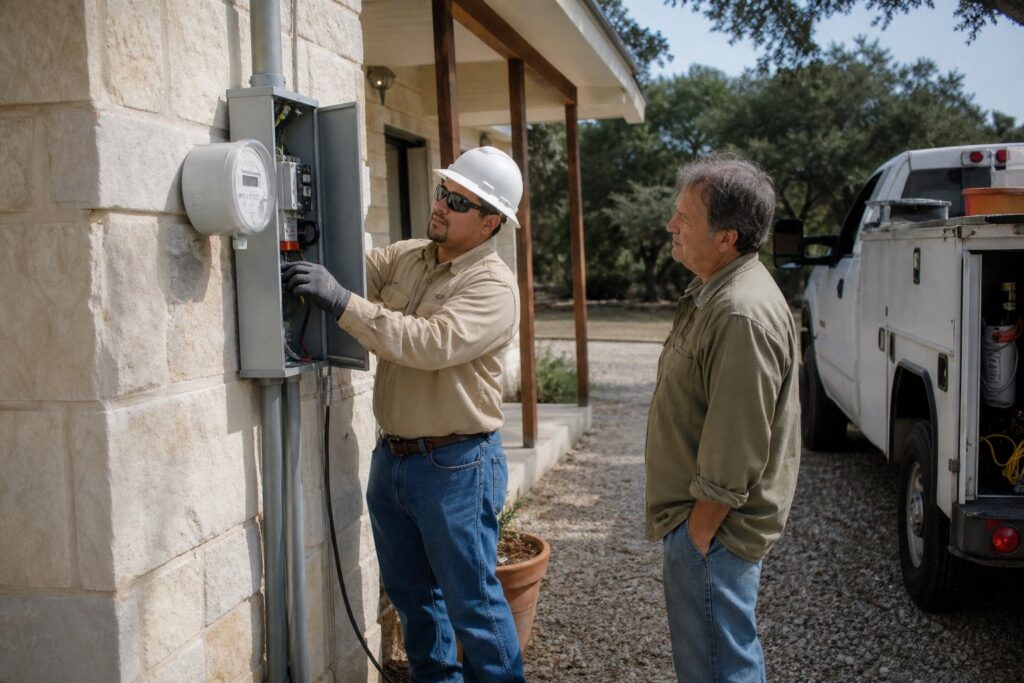
Smart meters make same-day and weekend switches possible because they let the utility flip service remotely instead of sending a technician to the property. When you enroll with a retail electric provider, that provider sends your request through Smart Meter Texas and the local TDU, such as Oncor, while ERCOT coordinates the grid-level data behind the switch.
Older analog meters still exist in some rural pockets, and those may require an in-person technician visit, which rules out same-day weekend service. The Public Utility Commission of Texas oversees this switching process across the market, and Power to Choose lists which Texas electricity providers serve your ZIP code so you can check same-day options directly.
Providers like Gexa Energy, Reliant, TXU Energy, Direct Energy, Champion Energy, Pulse Power, Amigo Energy, Cirro Energy, Green Mountain Energy, Rhythm Energy, Tara Energy, and TriEagle all operate within this same ERCOT-managed system, though their cutoff times and weekend policies differ. Amigo Energy advertises same-day connection by phone for customers who call before the daily cutoff.
Before you commit to a mover’s timeline, it helps to compare electricity rates for your address so you know which providers actually serve your ZIP code and can hit a weekend start date.
Are Free Weekends Plans Worth the Higher Weekday Rate?
Free weekends plans pay off only if you can shift a large share of your electricity use into the free hours. For most households, the elevated weekday rate cancels out the savings.
These are time-of-use plans, so your rate changes by day and hour instead of staying flat. Providers set the “free” window against a much higher daytime price to make the math work on their end.
Advertised daytime rates on these plans commonly run 18 to 27 cents per kWh, compared to 7 to 10 cents per kWh on a standard fixed-rate plan covering the same hours, according to an analysis of time-of-use pricing structures. That gap is the whole story behind whether you save or lose money.
How Free Weekends and Free Nights Plans Bill Usage
Free weekends and free nights plans bill your usage in two tiers: near-zero or $0 per kWh during the designated off-peak window, and a marked-up rate for every other hour. TDU delivery charges and base charges still apply during the free hours in most cases because they cover the cost of running power lines to your home regardless of the per-kWh price, as explained in this breakdown of how free nights and weekends billing works.
Plans like Reliant Truly Free Nights and Champion Energy Free Weekends both follow this structure, though the exact free window differs. Some run Friday evening through Monday morning; others limit free hours to 9 PM through 6 AM overnight. 4Change Energy and other providers package similar time-of-use structures under different plan names, so reading the Electricity Facts Label matters more than the marketing name on the plan.
| Plan Type | Free Window | Typical Peak Rate |
|---|---|---|
| Free Weekends | Fri evening – Mon morning | 18-27¢/kWh weekdays |
| Free Nights | 9 PM – 6 AM daily | 18-27¢/kWh daytime |
| Traditional Fixed-Rate | None (flat rate) | 7-10¢/kWh all hours |
A side-by-side comparison of free nights and weekends plans in Texas shows off-peak rates as low as 15.6 cents per kWh on some current plans. That’s still well above the $0 marketing headline once you look past the free hours themselves.
Once you’ve seen how these plans price out, it’s worth taking a minute to check current electricity plans in your ZIP code and compare the actual EFL numbers side by side.
How to Read the Electricity Facts Label Before Enrolling
The Electricity Facts Label tells you the real cost of a plan, and you need to check three numbers before signing up: the free-period rate, the peak-period rate, and the TDU delivery charge. Providers are required to publish this document for every plan, and it’s the one place where marketing language gets replaced with actual cents-per-kWh figures.
Pull your last bill and find your total monthly kWh usage. Estimate what share of that usage could realistically move into the free window, then multiply your remaining daytime kWh by the plan’s listed peak rate.
Add that total to the delivery charges and compare it with your current bill. If the numbers work, the plan may be a good fit. If they don’t, a traditional fixed-rate plan like a Maxx Saver Value 12 style contract is the safer bet.
Also check the contract term and early termination fee before switching. Free nights and weekends plans often run 12 to 36 months, and canceling early can trigger a fee that erases months of savings, according to an explanation of contract terms in Texas free nights plans.
Who Can Shift Enough kWh Usage to Save
Night shift workers, EV owners charging overnight, and households running pool pumps on a delayed schedule tend to save the most on these plans. If your daily routine already keeps you out of the house during peak hours, or if you can automate appliances with smart plugs and a smart thermostat, the free window becomes much easier to hit consistently.
Households less suited to these plans include remote workers running air conditioning and computers all day, along with families who have kids home during peak hours. If most of your energy consumption happens between 9 AM and 9 PM on weekdays, the higher peak rate will likely cost more than a flat-rate plan, even with a completely free weekend.
Solar panel owners without a strong net metering buy-back deal can be a good fit too. Daytime solar production covers usage while the sun’s up, and the free nighttime window fills the gap once panels stop generating, letting the household avoid peak rates almost entirely.
Conclusion
Weekend electricity connections in Texas run smoothly for most homes, especially when a smart meter is already installed and enrollment is completed before your provider’s Saturday cutoff. Sunday and holiday requests are more likely to wait until the next business day, so switching providers a day early can help you avoid surprises.
Free nights and weekends plans can lower your bill significantly if your household already uses power outside typical daytime hours. On the flip side, the marked-up peak rate makes these plans a poor fit for anyone running a full house during the day.
Reading the Electricity Facts Label and running the kWh math against your actual bill is the only reliable way to know which plan type fits your home. Before you lock in a moving date or a new contract, take a few minutes to compare providers and plan prices for your ZIP code so your start date and your rate both work in your favor.