
A heat pump’s rated efficiency means little if the system is oversized, mismatched or poorly commissioned.
The best installation starts with a room-by-room load calculation and ends with measured airflow, refrigerant and control checks. It is not simply an outdoor-unit swap.
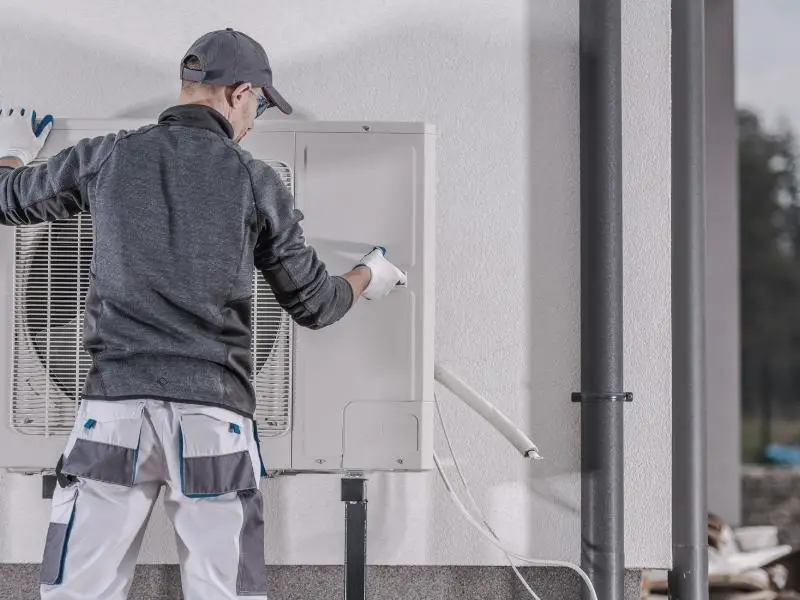
Choose the right heat-pump layout
A ducted heat pump can reuse suitable central ductwork. A ductless mini-split serves individual rooms or zones and is often easier where ducts do not exist. Multi-split systems connect several indoor units to one outdoor unit, while a separate single-zone system can offer better redundancy and low-load control.
Cold-climate performance, design heating load, available electrical capacity, noise and outdoor-unit placement matter more than a headline efficiency number. If backup heat is required, the controls should minimise unnecessary resistance-heat use.
Require a load calculation, not a size guess
Ask the contractor for an ACCA Manual J or equivalent heating and cooling load calculation. ENERGY STAR specifically recommends Manual J sizing. Replacing the old system with the same capacity can repeat an earlier sizing error, especially after insulation or air-sealing work.
Oversized equipment tends to cycle, control humidity poorly and operate less efficiently. Undersized equipment may be appropriate only when the design intentionally includes supplemental heat for rare extremes.
For a split system, confirm the indoor coil, air handler and outdoor unit are an AHRI-certified match. Ask for the AHRI Reference Number and certificate showing the tested SEER2, EER2 and HSPF2 ratings.
What a complete quote should include
- Exact indoor and outdoor model numbers and certified performance.
- Design temperatures, calculated loads and expected capacity at cold conditions.
- Duct testing, sealing or modifications, plus required airflow.
- Electrical circuit, disconnect, surge protection and any panel work.
- Condensate drainage, equipment pads, line-set routing and wall repairs.
- Permits, inspections, disposal, warranty registration and maintenance terms.
- Commissioning measurements and owner training.
Compare scope and performance, not only price. A low bid that omits duct correction, electrical work or commissioning can cost more later.
Installation and commissioning
Heat-pump installation involves high-voltage wiring, refrigerant handling, drainage and code compliance. Use licensed trades where required. The installer should follow the manufacturer’s limits for line length, elevation, pipe sizing, evacuation and refrigerant charge.
Before handover, the contractor should verify airflow and static pressure, refrigerant charge, supply and return temperatures, condensate drainage, thermostat staging, backup heat, defrost operation and communication between components. The system should be tested in every available mode.
Keep the load calculation, permits, AHRI certificate, model and serial numbers, commissioning report, invoices and warranty documents.
Costs, rebates and the 2026 federal-credit change
Installed cost depends on capacity, number of zones, ductwork, electrical upgrades, climate performance and site access. Obtain several itemised quotes from contractors who service the equipment they install.
Check current utility, state and local rebates before signing. In the United States, the federal Energy Efficient Home Improvement Credit cannot be claimed for property placed in service after December 31, 2025, according to the IRS. Older articles describing a federal heat-pump credit for 2026 are outdated.
After the installer leaves
Learn how to use setbacks, auxiliary heat and filter reminders. Keep outdoor airflow clear, clean or replace filters on schedule and arrange professional maintenance at the interval the manufacturer recommends.
Bottom line: a successful heat-pump installation is a design and commissioning job. Insist on calculated sizing, matched equipment, a complete scope and recorded test results.
Sources: ENERGY STAR air-source heat pumps, AHRI heat-pump guidance and IRS Form 5695 instructions.