
Biomass energy has no single price. A plant using free on-site residues and selling useful heat has a different cost structure from a stand-alone power station that buys, dries and trucks fuel over long distances.
Compare projects with levelized cost of energy, but also test feedstock contracts, capacity factor, heat revenue, emissions controls and financing. Those inputs usually matter more than a generic cost per kilowatt-hour.
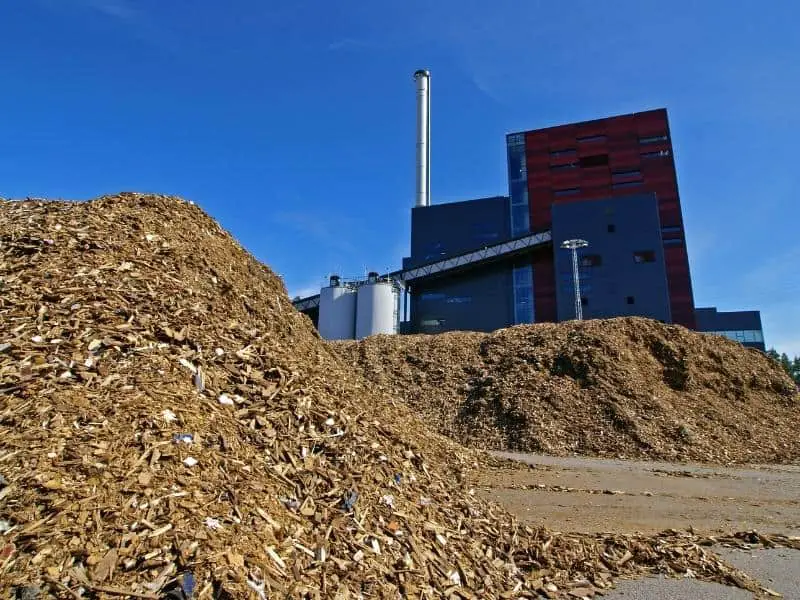
What Makes Up the Cost of Biomass Power?
- Development: Feasibility, engineering, permits, environmental review and interconnection studies.
- Plant capital: Fuel receiving, storage, preparation, boiler or gasifier, turbine or engine, controls and grid equipment.
- Emission controls: Particulate, nitrogen-oxide, sulfur, carbon-monoxide and ash systems as required.
- Feedstock: Purchase, collection, preprocessing, drying, transport, testing and storage losses.
- Operations: Labor, maintenance, consumables, water, auxiliary electricity and insurance.
- Residues: Ash, wastewater, digestate or other byproducts and their disposal or sale.
- Financing: Interest during construction, debt terms, taxes and required return.
Biomass plants have higher ongoing fuel and handling costs than wind or solar, but they can provide scheduled output and useful thermal energy.
Use Levelized Cost Carefully
Levelized cost spreads lifetime capital, finance, fuel and operating expenses over discounted electricity generation:
LCOE = lifetime discounted costs ÷ lifetime discounted electricity
The result changes sharply with capacity factor and fuel price. A plant that runs fewer hours still carries fixed debt and staffing costs across fewer megawatt-hours.
As one public benchmark, an NREL report using 2023 Annual Technology Baseline data showed biopower at roughly $5,031 per kW of capital cost and $165 per MWh of levelized energy. That is a modeled reference, not a quote for a particular site.
Feedstock Often Decides the Economics
Price feedstock on a delivered dry-energy basis, not simply dollars per wet ton. Moisture and contamination increase hauling and reduce usable heat.
A defensible supply model includes:
- annual dry tons within an economic transport radius;
- competing users and seasonal availability;
- moisture, ash and heating-value specifications;
- escalation, minimum volume and rejection terms;
- storage volume, fire protection and degradation losses; and
- backup fuel or outage risk when deliveries fail.
Waste projects may receive tipping fees, while premium pellets or purpose-grown crops are purchased fuels. Do not assume a waste stream is free once sorting, permitting and transport are included.
When Biomass Cost Can Be Competitive
Economics improve when a facility already produces concentrated residues, avoids disposal cost, uses existing industrial infrastructure or sells both electricity and heat.
Combined heat and power can raise total fuel utilization, but only if a nearby customer consistently needs the heat. Landfill-gas and digester projects may also earn value from avoided methane emissions or waste treatment.
Economics weaken with long truck routes, low plant utilization, variable fuel quality, expensive emission controls or uncertain renewable-credit revenue.
Project Cost Checklist
- Get firm equipment, construction and interconnection estimates.
- Model base, low and high feedstock prices and moisture.
- Include parasitic loads and planned and forced outages.
- Separate electricity, useful heat, tipping-fee and environmental-credit revenue.
- Test interest rate, construction delay and cost-overrun scenarios.
- Confirm permits, ash outlets and long-term feedstock contracts.
- Compare with efficiency, electrification and other generation alternatives.
Bottom line: Biomass is cost-effective when fuel is local, predictable and used efficiently. Delivered dry-energy cost and plant utilization matter more than a headline fuel price.
References: NREL cost benchmark using 2023 ATB data and U.S. EIA biomass overview.