
An air-source heat pump heats and cools a building by moving heat between indoor and outdoor air. It replaces both an air conditioner and, in many homes, most or all of the heating system without burning fuel on site.
The technology works in cold climates, but equipment selection matters. Size it from a room-by-room load calculation and compare its published heating capacity at your local winter design temperature, not just its nominal tonnage or seasonal efficiency label.
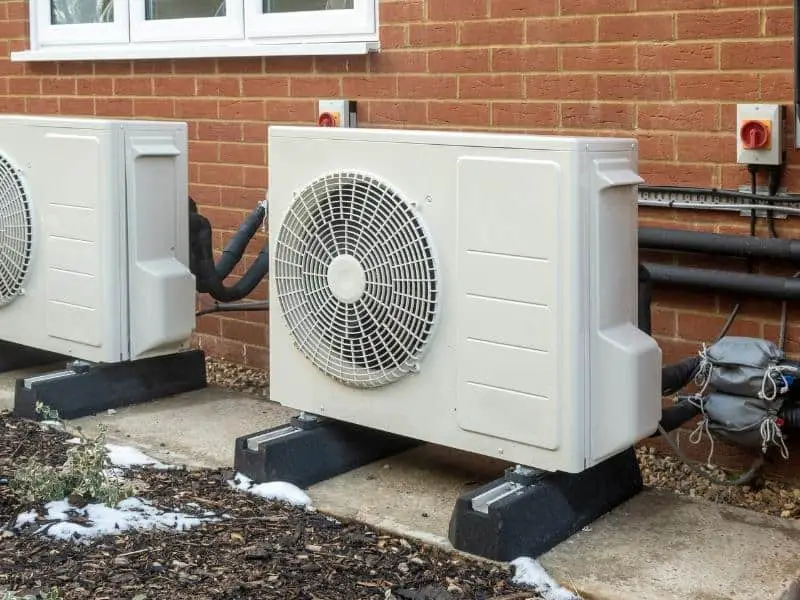
How an Air-Source Heat Pump Works
In heating mode, refrigerant absorbs heat from outdoor air at the outdoor coil. The compressor raises the refrigerant’s pressure and temperature, and the indoor coil releases that heat into the building.
In cooling mode, a reversing valve changes refrigerant flow so the system absorbs indoor heat and rejects it outside. The indoor coil also removes moisture as air passes over it.
Variable-speed compressors and fans can adjust output to match the load. This reduces on-off cycling and can improve comfort and part-load efficiency.
Types of Air-Source Heat Pump
- Ducted split system: An outdoor unit connects to an indoor air handler or compatible furnace and uses ducts.
- Ductless mini-split: One outdoor unit serves one or more wall, ceiling or floor-mounted indoor units.
- Compact-ducted system: Short duct runs serve several nearby rooms.
- Packaged heat pump: Heating and cooling components share one outdoor cabinet.
- Dual-fuel system: A heat pump operates with a furnace that takes over based on temperature, capacity or cost controls.
- Air-to-water heat pump: Heat is delivered through water for suitable hydronic heating or domestic hot-water applications.
The right distribution system depends on the floor plan, existing ducts, room loads, climate and whether the project needs heating, cooling or both.
Efficiency, Sizing and Cold-Weather Performance
Heat pumps transfer heat, so they can deliver more heat energy than the electricity they consume. Actual efficiency changes with outdoor temperature, supply-air temperature, defrost cycles, duct losses and compressor speed.
Review SEER2 for cooling, HSPF2 for seasonal heating and coefficient of performance at low temperatures. For cold-climate equipment, check capacity and COP at 5°F and at the home’s actual winter design temperature.
ENERGY STAR’s current cold-climate criteria require a COP of at least 1.75 at 5°F and at least 70% of the 47°F heating capacity at 5°F. A certified unit can still need supplemental heat if the building load exceeds its output below the balance point.
Ask for an ACCA Manual J load calculation and matched-system performance data. Oversizing can reduce comfort and humidity control; undersizing can cause excessive backup-heat use.
Cost, Incentives and Refrigerants
Installed cost varies with capacity, ducts, electrical upgrades, indoor-unit count, refrigerant-line routing, condensate work, permits and local labor. Compare itemized quotes with exact model numbers, matched ratings and low-temperature capacity.
Calculate operating cost using modeled annual electricity consumption and your utility’s rate structure. Compare that with the fuel and fixed charges of the system being replaced.
For U.S. homeowners, the federal Energy Efficient Home Improvement Credit is unavailable for heat-pump property placed in service after December 31, 2025. State, local and utility programs may still offer rebates or financing.
Newer systems may use lower-global-warming-potential refrigerants such as R-32 or R-454B. These systems have specific tools, components, handling and safety requirements. Confirm the contractor is trained for the exact refrigerant and do not mix refrigerants.
Air-Source Heat Pump Buying Checklist
- Room-by-room heating and cooling loads.
- Heating capacity and COP at the winter design temperature.
- Backup-heat type, capacity and control strategy.
- Duct leakage, airflow and return-air provisions.
- Matched indoor and outdoor model ratings.
- Noise data and outdoor-unit placement.
- Electrical service, breaker and disconnect requirements.
- Condensate drainage, snow clearance and defrost-water management.
- Parts, labor and compressor warranty terms.
- Commissioning report and future service support.
Bottom line: Air-source heat pumps can provide efficient year-round comfort, but climate-specific capacity and installation quality matter more than the headline efficiency rating.
References: DOE heat pump systems guide, ENERGY STAR heat-pump criteria and IRS Form 5695 instructions.