
Battery terminal covers are a small part with a serious job: preventing an exposed terminal from contacting metal and creating a high-current short circuit. If a terminal can be reached by a tool, cable, body panel or loose object, it should be protected.
Cover the positive terminal at minimum, and protect both terminals where the battery design allows it. Use a correctly fitting nonconductive boot or cap, then pair it with secure mounting, clean connections and properly sized circuit protection.
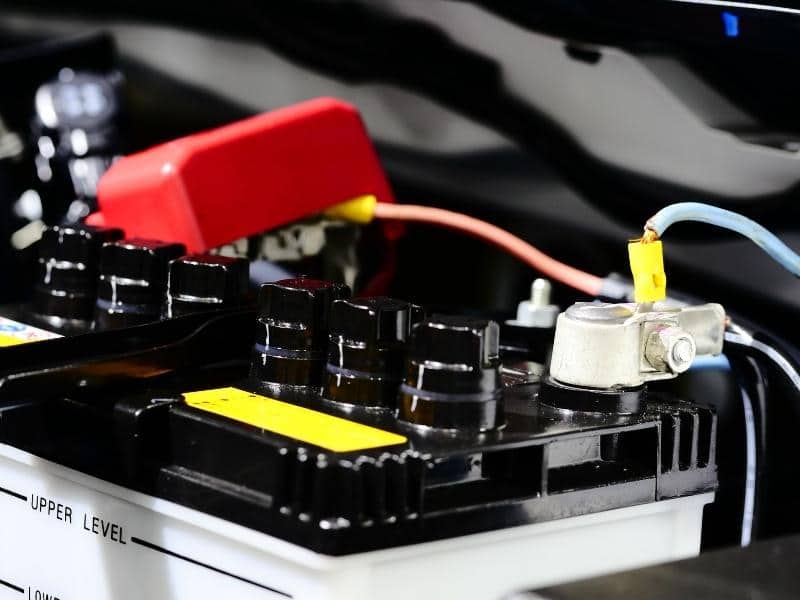
What Battery Terminal Covers Prevent
A battery can deliver very high current through an accidental short. If a metal tool bridges the positive terminal to a grounded vehicle body, or loose conductive material connects two terminals, the result can include sparks, severe heat, burns, damaged wiring or fire.
A cover creates a nonconductive barrier around the exposed connection. It also reduces accidental contact during routine work and helps shield the terminal from dirt and splash, although it does not make the connection waterproof or stop corrosion by itself.
Official battery transport guidance uses nonconductive terminal caps as one accepted way to protect batteries against short circuits. The same electrical principle makes terminal covers useful on installed automotive, marine, RV, generator, solar and backup-power batteries.
Which Terminals Need Covers?
The positive terminal is the priority in a negative-ground vehicle because contact between that terminal and the chassis can complete a short circuit. Covering both terminals provides better protection when both are exposed.
Use the cover or battery enclosure specified by the equipment manufacturer. The cover should:
- fit the terminal and cable without leaving conductive parts unnecessarily exposed;
- stay in place through vibration and normal servicing;
- be made from durable, nonconductive material;
- avoid pinching, sharply bending or pulling on the cable; and
- allow inspection without damaging the connection.
Red is normally used for positive and black for negative, but color is identification, not electrical protection. Confirm polarity from the battery markings before connecting or disconnecting anything.
A Cover Is Only One Layer of Protection
A terminal boot does not replace a fuse, breaker, insulated enclosure or secure battery hold-down. The positive conductor should have correctly rated overcurrent protection positioned as required by the equipment maker and applicable code.
Keep terminals clean and tighten connections to the manufacturer’s torque specification. A loose or corroded connection can create resistance and heat underneath an otherwise intact cover. Replace a boot that is split, melted, brittle or too loose to remain seated.
Never place tools on top of a battery. Remove metal jewelry before battery work, use insulated tools where appropriate and follow the equipment’s disconnect sequence. For vehicle batteries, that normally means disconnecting negative first and reconnecting it last, unless the manufacturer specifies otherwise.
When a Terminal Cover Is Essential
Install or replace a cover promptly when the positive terminal sits close to metalwork, the battery is carried or shipped, conductive items could enter the compartment, or the original equipment included a protective boot. Shipping rules can impose specific terminal-protection requirements, so check the carrier and battery type before transport.
Bottom line: Battery terminal covers are inexpensive short-circuit protection. If an exposed terminal could be touched by metal, covering it is the sensible and often required choice.
Reference: U.S. DOT PHMSA lithium battery safety guidance.