
A residential heat pump may draw roughly 8 to 30 amps while the compressor runs, but the required circuits can range from about 15 amps to well over 100 amps when air handlers and electric backup heat are included.
Use the nameplates and installation manual for the exact matched system. Tonage, breaker size and running current are not interchangeable.
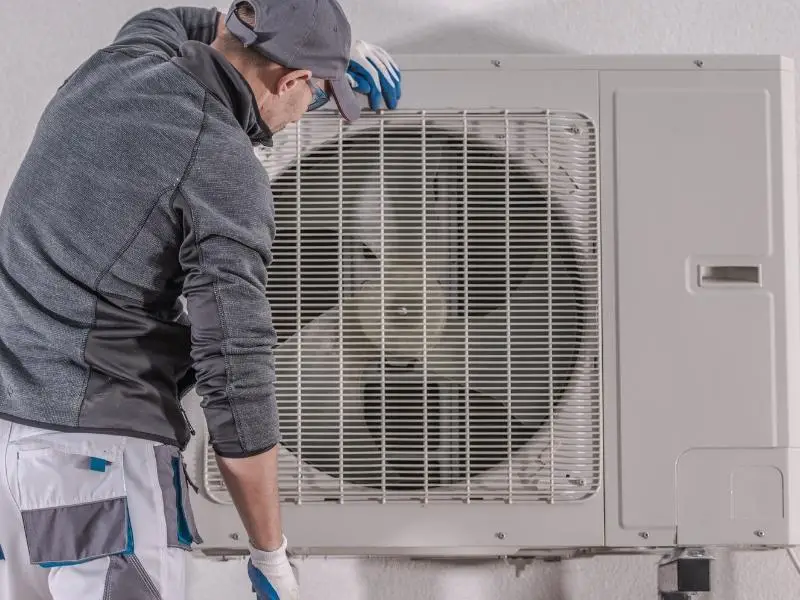
Why heat-pump amperage varies
Compressor speed, outdoor temperature, indoor airflow and operating mode change the current. A variable-speed heat pump may draw low current for long periods, then ramp up as the load increases.
The outdoor unit and indoor air handler usually have separate circuits. Electric resistance heat strips can add 20 to 100 amps or more depending on their staged capacity and supply voltage.
Defrost may run the compressor, indoor fan and supplemental heat together, creating a higher system demand than ordinary heating.
Calculate operating amps
For a single-phase load:
Amps = watts ÷ volts ÷ power factor.
A heat pump using 3,500 watts at 240 volts with a power factor of 0.95 draws about:
3,500 ÷ 240 ÷ 0.95 = 15.4 amps.
A 10-kilowatt resistance heat kit draws about 41.7 amps at 240 volts before allowing for conductor and overcurrent-protection rules.
Do not use this simple calculation to select wiring. Motors, inverters, staged heaters and code requirements make the nameplate and manufacturer instructions the governing values.
Read the nameplate correctly
- RLA or rated load amps: A compressor rating used for equipment design and protection, not a promise of exact running current.
- LRA or locked rotor amps: High current associated with a stalled or starting conventional compressor.
- MCA or minimum circuit ampacity: The minimum conductor ampacity for the equipment circuit.
- MOCP or maximum overcurrent protection: The largest permitted fuse or breaker for that unit.
The circuit breaker can be larger than normal running current because it must tolerate motor operation while protecting the wiring and equipment. Never increase a breaker size to stop nuisance trips unless the nameplate and a qualified electrician confirm it is permitted.
Inverter and conventional compressors
A conventional single-speed compressor has a distinct start and fixed running stage. An inverter-driven compressor ramps speed electronically, usually reducing abrupt starting current and allowing lower part-load amperage.
Inverter equipment can still have maximum input and branch-circuit requirements that matter for panels and generators. Do not assume a soft start or inverter makes the peak demand negligible.
Panel and generator sizing
Add the outdoor unit, indoor fan, pumps, crankcase heater and every stage of allowed supplemental heat. Load calculations must also include other building circuits.
A generator needs enough continuous capacity and transient response for the selected heat-pump configuration. Load management can prevent resistance heat, water heating or other large loads from operating together.
Have the HVAC contractor provide exact model numbers, AHRI matched-system data and electrical nameplates before the electrician or generator installer completes the design.
If current is higher than expected
Dirty coils or filters, restricted ducts, low supply voltage, mechanical problems and incorrect refrigerant charge can increase current or run time. Repeated breaker trips, hot wiring or abnormal noise require professional diagnosis.
Bottom line: running amps are useful for monitoring, but MCA, MOCP and the approved heat-kit data determine the electrical installation.
Sources: U.S. Department of Energy heat-pump overview, AHRI matched-system guidance and ENERGY STAR air-source heat pumps.