
A 2,000W generator can often run one modern refrigerator-freezer, but the appliance label and starting wattage decide the real requirement. If you need to run a separate refrigerator and freezer together, a generator with roughly 3,000 to 3,500 starting watts usually provides more practical headroom.
Do not size from running watts alone. Refrigerator compressors draw extra power when they start, and a generator must cover the total running load plus the largest startup demand that can occur.
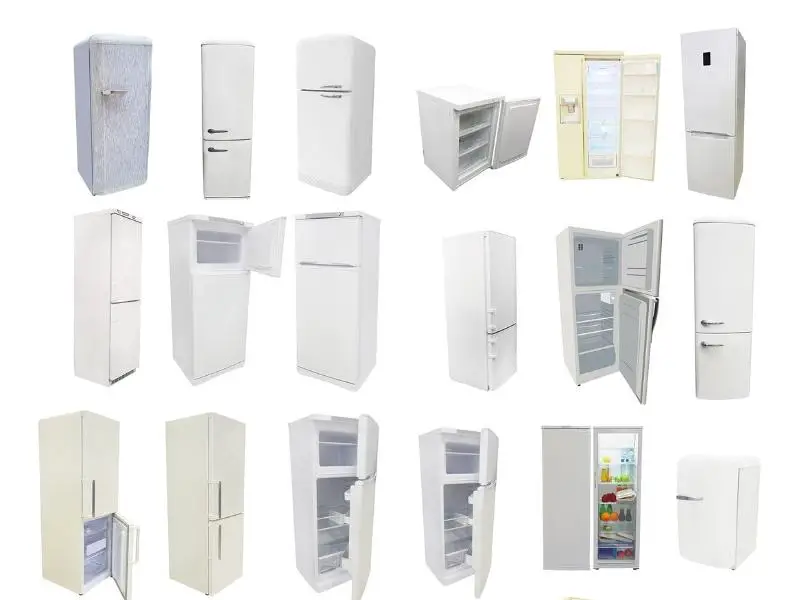
Calculate the Generator Size
Find the running and starting watts in each appliance manual or on its data label. If the label gives volts and amps, multiply them to estimate volt-amperes, but use manufacturer wattage data when available because motor loads have power-factor and startup effects.
- Add the running watts of every item that will operate at the same time.
- Identify the single largest additional starting-watt requirement.
- Add that startup requirement to the total running watts.
- Choose a generator that can deliver the result without exceeding its rated running or surge output.
Generac’s sizing worksheet uses 700 running watts for a refrigerator/freezer as a general planning figure and notes that starting watts are often about twice running watts. That is an estimate, not a substitute for the appliance’s specifications.
Practical Sizing Examples
One refrigerator-freezer: If the unit uses 700 running watts and needs 1,400 starting watts, a generator must support at least 1,400 watts at startup and 700 watts continuously. A 2,000 starting-watt inverter generator leaves useful margin for controls, lights or charging small devices.
Separate refrigerator and freezer: If each uses 700 running watts and the larger startup requirement is another 700 watts, the calculated minimum is 2,100 watts. Choosing around 3,000 to 3,500 starting watts gives better margin for compressor overlap and other essential loads.
Whole emergency-load panel: Add every connected load, including furnace blowers, sump pumps, well pumps and lights. One of these may set the generator size rather than the refrigerator.
Confirm whether the generator’s advertised number is starting watts or continuous running watts. Runtime claims also depend on load and fuel-tank size.
Choose the Right Generator and Connection
- Output quality: A quality inverter generator generally provides stable power and adjusts engine speed with load. Check the appliance and generator manuals for compatibility.
- Outlets and cords: Use an outdoor-rated extension cord with the gauge and length specified for the load. Fully uncoil it and inspect it for damage.
- Home wiring: Never backfeed a generator through a wall outlet. A transfer switch or listed interlock must be installed as permitted by local code.
- Load management: Stagger large loads so compressors and pumps do not all start together.
- Fuel: Store and handle fuel as directed, and shut the generator down and let it cool before refueling.
Generator and Food Safety
Run a portable generator outside only, at least 20 feet from the home, with the exhaust pointed away from buildings, windows and vents. Never run it in a garage, shed, basement, porch or other enclosed or partly enclosed space. Install working carbon monoxide alarms on every level and outside sleeping areas.
Keep refrigerator and freezer doors closed during an outage. FoodSafety.gov says an unopened refrigerator stays cold for about four hours, while a full freezer holds temperature for about 48 hours, or 24 hours when half full.
Use appliance thermometers. Perishable food that has been above 40°F for two hours or more should be discarded. Do not judge food safety by smell or appearance alone.
Bottom line: Use measured appliance data, add the largest startup load and leave reasonable capacity margin. For many homes, that means about 2,000W for one refrigerator-freezer or 3,000 to 3,500 starting watts for separate units.
References: Generac wattage worksheet, CPSC generator safety and FoodSafety.gov outage guidance.