
Heated seats are one of the smallest winter electrical loads in a car. In an NREL test, the driver and passenger seat heaters drew 128 watts together while active, far below the kilowatts that full-cabin electric heating can require.
The exact draw is vehicle-specific and changes with the heat setting and thermostat duty cycle. For an EV, targeted seat heat can improve comfort with less battery energy than heating the entire cabin, but it does not replace the windshield defogging needed for safe visibility.
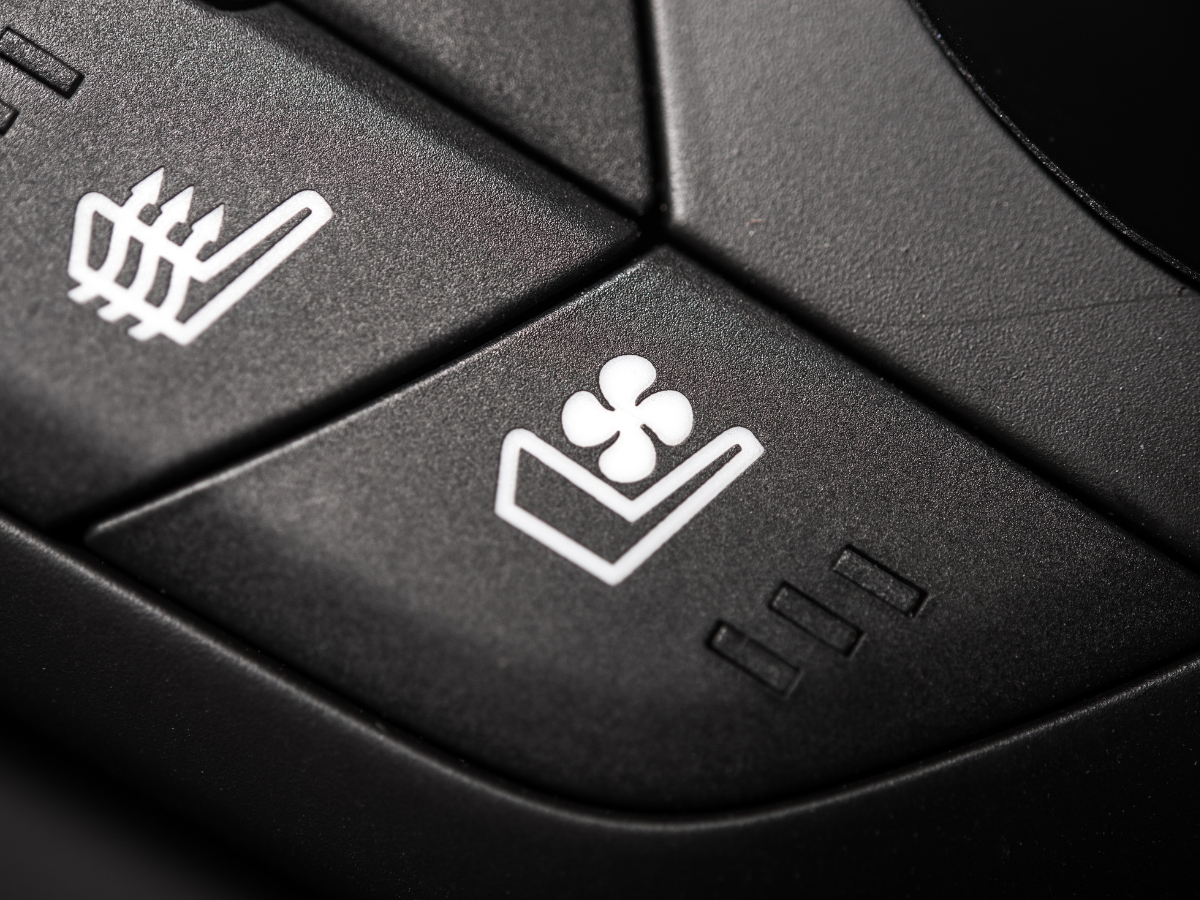
Heated-seat power consumption
A useful real-world reference comes from NREL testing in winter conditions. Two heated seats used 128 watts while on and cycled at an 83.8% duty rate during a 33-minute test, consuming 0.059 kWh.
That result is not a universal specification. Seat size, heating-element design, control strategy and selected temperature all change the draw. Check the service manual or measure current if you need the value for a specific vehicle.
Calculate energy use with:
Energy in kWh = watts ÷ 1,000 × hours × duty cycle
For example, a 60-watt seat operating for one hour at a 50% duty cycle uses 0.03 kWh.
Effect on EV range and fuel use
In an EV, the seat heaters are normally low-voltage loads, but their energy ultimately comes from the traction battery through the vehicle’s electrical system. Their range impact is generally small compared with resistance cabin heating.
NREL research found that targeted heating technologies can reduce total winter heating demand while maintaining occupant comfort. In one pre-production EV study, heated seats, a heated steering wheel and a heated floor mat reduced transient winter heating energy by 28.5%.
In a gasoline or diesel vehicle, the alternator supplies the electrical load while the engine is running. That load is not free, but heated seats are still modest compared with major vehicle loads.
How to use heated seats efficiently
- Precondition an EV while it is plugged in when the vehicle supports it.
- Start the seat on high, then reduce the setting once warm.
- Heat only occupied seats.
- Use seat and steering-wheel heat to reduce cabin demand when visibility and comfort allow.
- Keep enough airflow and windshield heat to prevent fogging.
Can heated seats drain the battery?
They can contribute to a discharged 12-volt battery if left operating with the vehicle off, although many modern vehicles shut them down automatically. A weak battery, faulty relay or damaged seat-heater circuit can change that behavior.
If a seat stays hot, heats unevenly, smells scorched, blows a fuse or damages the upholstery, switch it off and have the circuit inspected. Do not continue using a seat heater with visible damage.
Bottom line
Heated seats typically use tens of watts per occupied seat, not the kilowatts associated with full-cabin heating. Use the vehicle’s own specification for an exact number, and use targeted heating strategically to improve winter comfort and EV efficiency.
Sources