
A faint hum or crackle from an overhead power line can be normal. A sudden, loud buzz with flashing, smoke or a damaged wire is not.
Stay clear and report any new or intense noise to the electric utility. Never approach the line to find the source yourself.
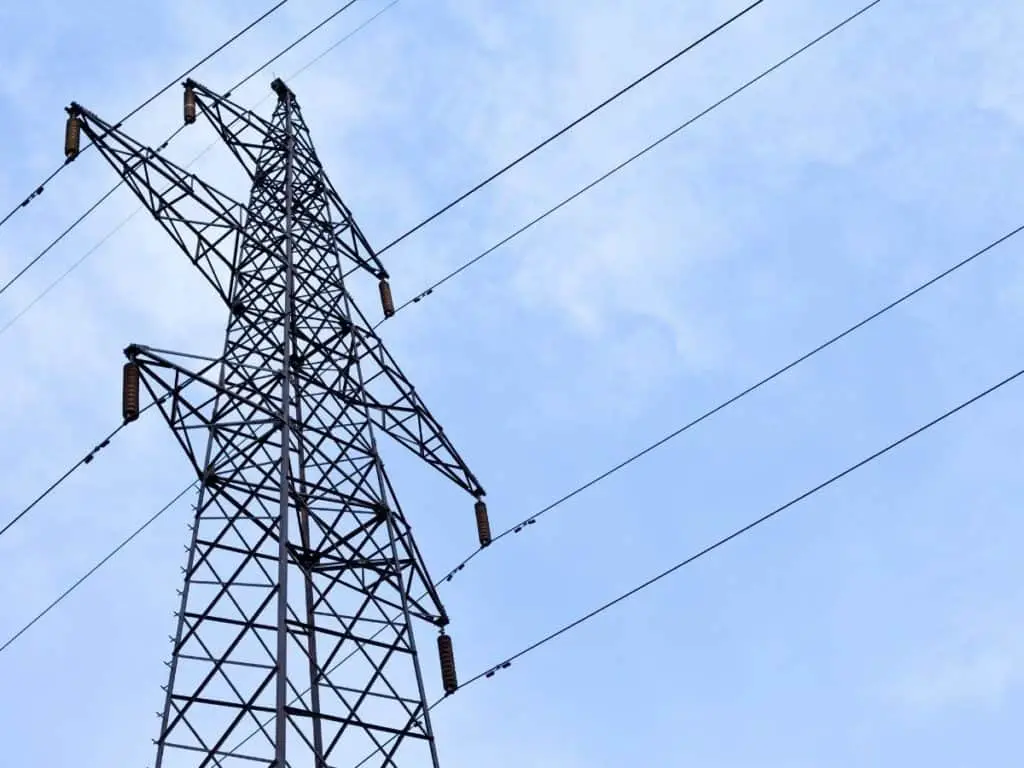
Why high-voltage power lines buzz
High-voltage transmission lines can produce corona discharge when the electric field around a conductor ionises the surrounding air. It may sound like hissing, frying, crackling or a low hum.
Rain, fog and high humidity make corona noise more noticeable because water droplets concentrate the electric field at the conductor surface. Dirt, rough surfaces and damaged hardware can also affect it.
Corona is more associated with high-voltage transmission lines than ordinary neighbourhood distribution lines. Utilities design conductor spacing and hardware to limit corona, radio interference and energy loss.
Other sources of electrical hum
Transformers can emit a steady low-frequency hum as their magnetic cores and windings respond to alternating current. Some vibration is normal, but a major change in volume may indicate loose parts, overload or equipment deterioration.
Loose or contaminated insulators, damaged connectors, vegetation contact and arcing can create sharper buzzing or crackling. The sound may travel, so the closest pole is not necessarily the source.
When to call the utility immediately
Report the condition promptly if the noise is new, loud or localised, especially with:
- Visible arcing, flashes, sparks or smoke.
- A broken insulator, leaning pole or sagging wire.
- A tree or object touching the line.
- A burning smell, fire or repeated outages.
- A downed or low-hanging conductor.
Call emergency services if there is fire, a fallen line or an immediate public hazard. Assume every power line is energised, even when it is silent or the neighbourhood power is out.
Power-line safety
Do not touch a fallen wire or anything it contacts, including fences, vehicles, trees or standing water. Keep other people away and follow the distance given by emergency services or the utility.
If a wire falls on a vehicle, occupants should normally remain inside and call for help. Leave only for an immediate hazard such as fire, following emergency instructions to avoid simultaneous contact with the vehicle and ground.
Keep ladders, antennas, drones, tools and tree branches well away from overhead conductors. OSHA requires at least 10 feet of clearance for many activities near lines up to 50 kilovolts, with greater distances for higher voltage. Homeowners should contact the utility rather than trying to judge voltage or clearance.
Does the buzzing indicate a health risk?
The audible sound itself is usually an operational noise or warning sign, not evidence of harmful radiation. Power lines also produce extremely low-frequency electric and magnetic fields.
The National Cancer Institute states that these fields are non-ionising and are not known to damage DNA directly. Research has not found consistent evidence linking typical residential exposure with cancer, although research into high exposures and childhood leukaemia continues.
Bottom line: a consistent faint sound can be normal, especially around high-voltage lines in wet weather. Treat any sudden, loud or visibly abnormal condition as a utility issue and keep your distance.
Sources: PG&E transmission-line noise explanation, OSHA downed-wire safety guidance and National Cancer Institute EMF fact sheet.